We represented Portflow at Jisc Digifest again this year, and as always, what stayed with us most was not just the programme, the sessions, or the buzz around new technologies. It was the conversations.
Across higher education and further education, we had thoughtful, honest, and genuinely meaningful conversations with people navigating a lot of change. Different institutions, different priorities, different pressures. But underneath it all, there was one thing that felt strikingly consistent: people care deeply about students.
That may sound simple, but at an event like this, where the sector is grappling with complexity from every direction, it matters. At the heart of so many discussions was the same intention.
- How do we make students’ lives easier?
- How do we make learning feel more valuable?
- How do we create experiences that help learners not just pass through education, but actually grow through it, and leave with something meaningful they can carry into the world beyond graduation?
In that sense, Digifest 2026’s theme, From disruption to direction, could not have been more fitting.
The conversation around AI is becoming more mature
This year’s programme was shaped around three themes: empowering people in the age of complexity, re-envisioning the educational experience, and creating responsible and ethical futures. Together, they captured something the sector is feeling very strongly right now: education is no longer just reacting to disruption. It is trying to respond with more clarity, more intention, and more humanity.
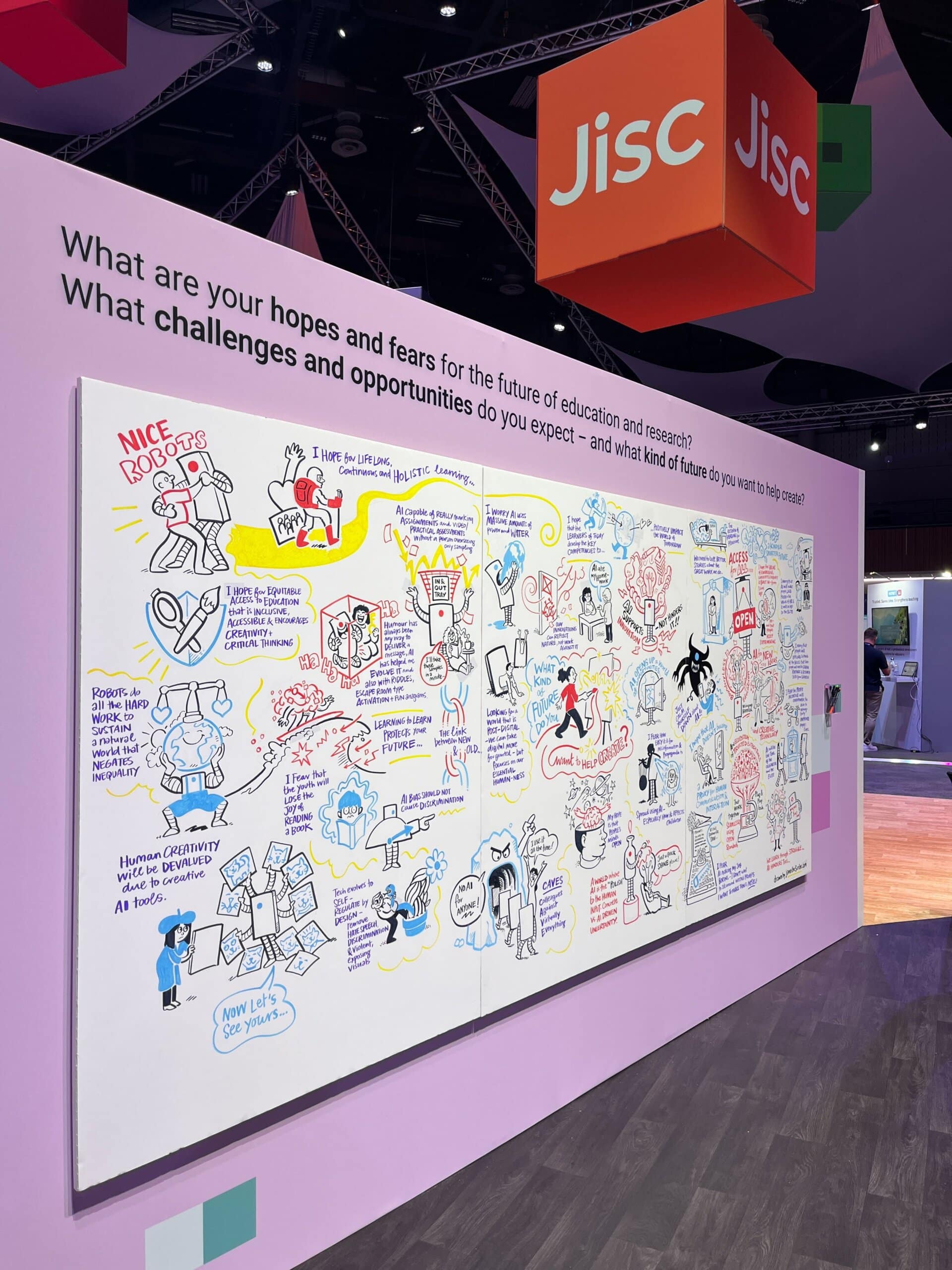
Of course, AI was everywhere. It was present in the sessions, in the side conversations, in the questions people were asking, and in the concerns they were carrying. But what stood out this year was not panic. It was maturity.
The conversation is evolving.
There is still uncertainty, of course. But increasingly, the focus is shifting away from the technology alone and toward the learning experience itself. Not just “what can AI do?” but “what should education protect, prioritise, and redesign in response?”
That felt important.
Because the most interesting conversations were not really about tools. They were about trust. About confidence. About digital fluency. About whether staff feel supported rather than overwhelmed. About whether students are being prepared not only to use technology, but to think critically around it, question it, and navigate it responsibly.
That people-first perspective was woven directly into the event’s framing, especially around building inclusive digital fluency and ensuring no one is left behind by the pace of change.

Connecting the dots across the student’s learning journey
And then there was the question beneath so many others:
What actually makes learning valuable now?
That question surfaced in different forms throughout the event.
It appeared in discussions around student voice and learner agency. In conversations about designing experiences that feel more inclusive and relevant. In the growing recognition that students need more than content delivery and end-point grades. They need opportunities to reflect, to connect the dots across their learning, to understand their own development, and to articulate what they can actually do.
That is where so many of the themes at the event naturally began to connect: Assessment. Employability. Authenticity. Digital confidence. Reflection. Belonging.
These are often treated as separate agendas, but they increasingly feel like parts of the same challenge. If we want students to be ready for life after graduation, then learning has to be more than transactional. It has to help them build a sense of progress, capability, and ownership. It has to help them recognise that what they are doing in education has meaning beyond a single module or a single submission.

Building meaningful educational experiences
That is why many of our conversations felt so aligned with what we, the Portflow team, care about.
Not because technology is the answer on its own. It is not. But because there is a growing need across the sector to make learning more visible across time. To help students see their development, not just their deadlines. To create stronger connections between assessment, reflection, personal growth, and employability. And to do that in ways that feel supportive for staff rather than adding yet another layer of complexity.
If there was one thing Digifest 2026 reinforced for us, it is this: the sector is asking better questions. Not just how to keep up with disruption, but how to move through it with purpose. Not just how to adopt new tools, but how to design learning that is more human. Not just how to respond to change, but how to shape it in ways that are ethical, inclusive, and genuinely useful for learners.
And that, more than anything, is what made this year’s event feel hopeful. Because even in a time of uncertainty, the direction is becoming clearer.
And if the conversations we had at Digifest are any indication, that direction is one where student value, learner agency, and meaningful educational experiences are finally moving closer to the centre of the conversation, exactly where they belong.
About the Author: Yas Farahani