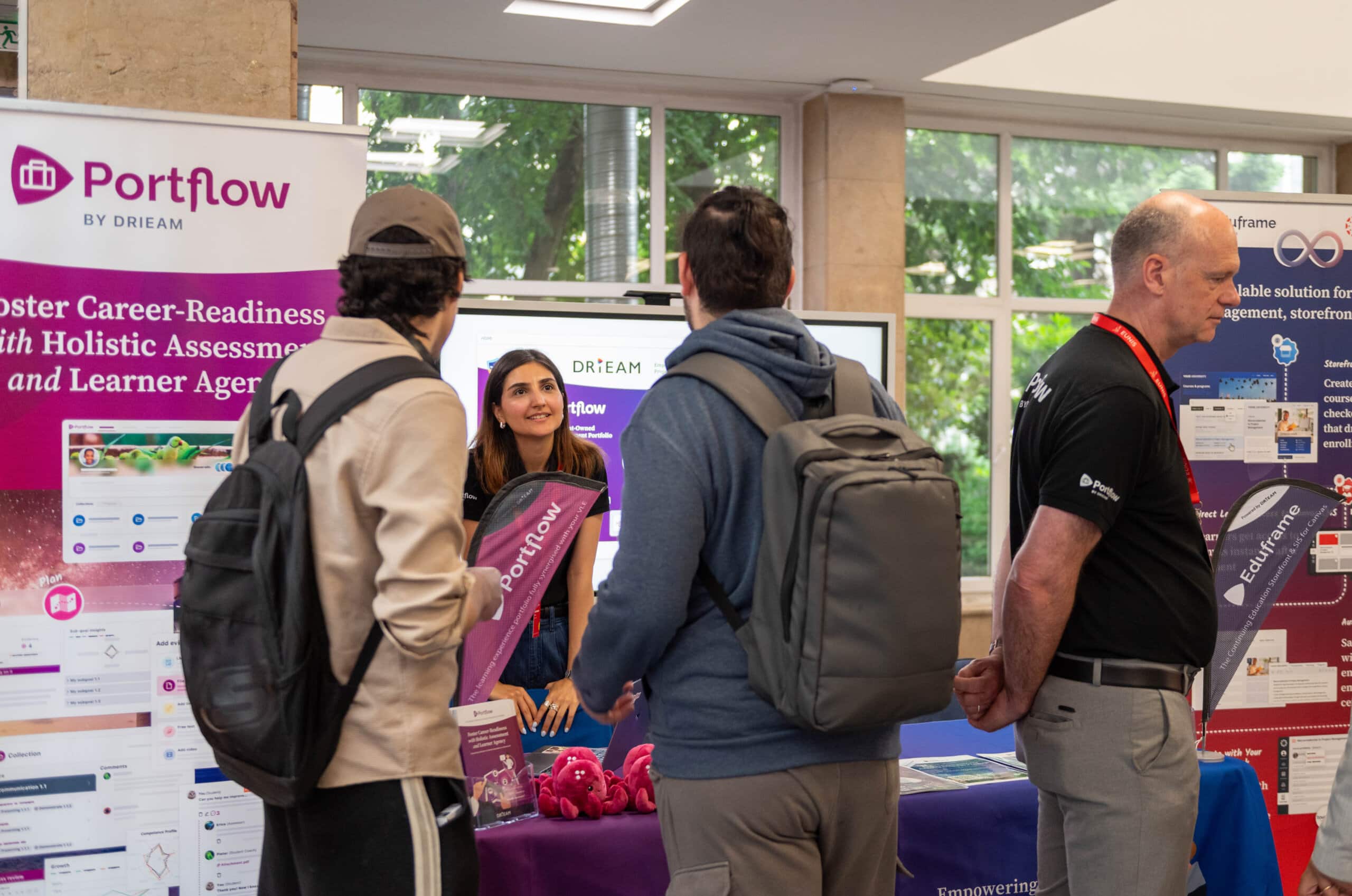
Last week, I had the privilege of attending the EUNIS Congress for the very first time. And what a setting for a debut: the captivating city of Timișoara, Romania.
Walking into a room filled with educators, technologists, and higher education professionals from across Europe (Romania, Latvia, Finland, Greece, Germany, Portugal, Spain, and beyond) I was immediately reminded of why this work matters. There is something quietly powerful about being in a space where everyone, despite their different languages and institutional contexts, is wrestling with the same questions.

Sessions That Made You Think
The programme was rich and genuinely thought-provoking. Conversations ranged from the evolving relationship between academic freedom and digital transformation in European higher education, to the principles of responsible AI use. Topics that feel both urgent and unresolved.
One session that stood out was led entirely by students, exploring how learning and career readiness look different before and after AI. Hearing that perspective directly from the people most affected by these shifts was refreshing and, frankly, overdue.
I also attended a session on audio quality in education. A topic that might sound niche until you sit with it for a moment. Universities pour significant investment into digital learning tools, yet often overlook the most fundamental layer of any lecture: whether students can simply hear it clearly. It was one of those sessions that reframes something obvious in a way you can’t un-see.
Drieam on Stage
We also had our own moment at the congress. Our Director of Strategic Partnerships, Bas ten Holter, delivered a session titled Developing and Evidencing Skills in the Age of AI: From Authentic Assessment to Continuing Education. The session tackled head-on the challenges AI is creating for education. And, more importantly, what institutions need to be doing about them right now. It was a great conversation to be part of.

The AI Conversation Is Growing Up
Unsurprisingly, AI dominated the hallway chats just as much as the formal sessions. But what struck me – and genuinely gave me hope – was the quality of those conversations.
The same maturity I had noticed in previous discussions with colleagues in UK and Ireland higher education was present here too. The narrative has shifted. The question is no longer whether to ban AI or double down on detection tools. And while ‘AI detection’ might look tidy on a management slide deck, anyone in the room who works closely with students knows it simply doesn’t hold up in practice.
What I heard instead were conversations about integration: how to weave AI literacy into curricula, how to help students understand these tools critically rather than just use them uncritically.
That is a meaningful change.
Of course, acknowledging the shift and actually making it happen are two very different things. Institutions face real, complex barriers: the need for appropriate digital infrastructure, dedicated staff support, genuine buy-in across teams, and – let’s be honest – budget. The road from good intentions to effective implementation is long, and the terrain is uneven.

Not Denial Anymore
If I were to map where the sector sits right now, I’d say we’ve collectively moved past the first stage of grief. The effect of AI on day-to-day education is no longer being denied. it’s being accepted. People are asking harder, better questions.
We still have a long way to go. But meeting the people gathered at EUNIS – thoughtful, experienced, and genuinely committed to getting this right – makes the mission feel far less impossible than it might seem on paper. We have to stay determined and not lose sight of what we’re working toward.
This is, ultimately, why I love being part of this industry.
People here care. They care about the students sitting in their classrooms and the ones logging in from across the world. They care about getting the pedagogy right, even when the technology is moving faster than any curriculum committee can keep pace with. They are passionate not just about what they’re doing, but about why.
That combination of passion, rigour, and a refusal to give up on people is what makes higher education worth fighting for.
Until next time, EUNIS!


About the Author: Yas Farahani